Best Ghee Brands of 2026: Our Top Picks After 50+ Hours of Research
We compared 20+ grass-fed ghee brands on sourcing, certifications, taste, and value. Here are the six brands worth buying in 2026.
Last updated:
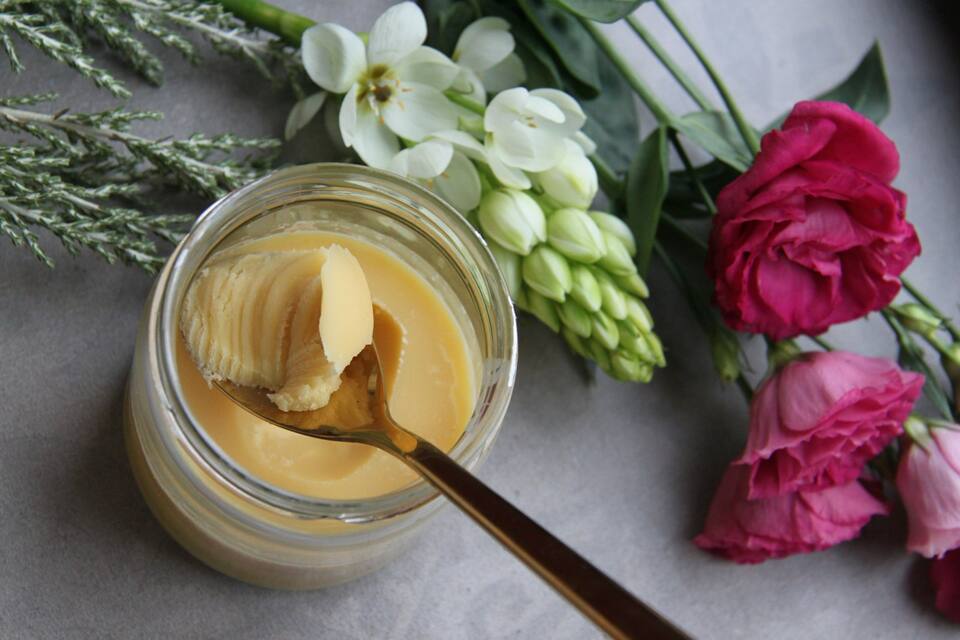
Ghee is clarified butter with the milk solids and water removed — the result is a shelf-stable cooking fat with a rich, nutty flavor and a smoke point nearly 135 degrees higher than regular butter. Originally developed in ancient India as both a cooking ingredient and a sacred food in Ayurvedic medicine, ghee has moved firmly into mainstream US wellness culture over the past decade.
The problem is that “ghee” on a label tells you very little. A jar can be made from grain-fed conventional dairy with minimal processing transparency and still legally be called ghee. Certifications — USDA Organic, Non-GMO Project, Whole30 Approved, Paleo Foundation — are the signal layer that separates brands serious about sourcing from those coasting on the category’s reputation.
We spent 50+ hours reviewing brand sourcing standards, evaluating certifications, reading production documentation, and cross-referencing third-party certification databases to produce this guide. Our picks focus on the six brands that consistently back up their claims with transparent sourcing, meaningful certifications, and genuine value for money.
Brand Reviews
Best Overall
Fourth & Heart
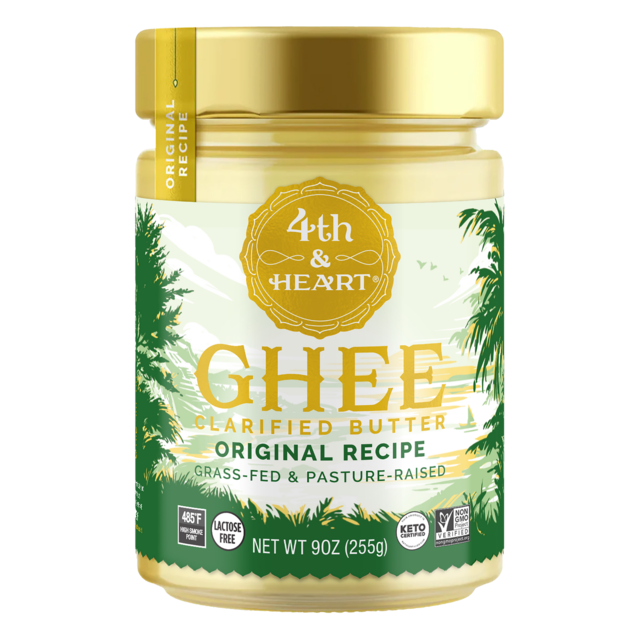
Fourth & Heart is the most accessible grass-fed ghee in the US market, and for most everyday cooks it is the straightforward choice. The brand holds both USDA Organic and Non-GMO Project certification — two independent standards that require third-party audit and annual re-certification. Sourced from New Zealand grass-fed dairy, the milk meets some of the strictest pasture-access standards in the world.
The original variety has a clean, mildly nutty flavor that works across nearly every cooking application: searing proteins, roasting vegetables, finishing grains, or stirring into morning coffee. It is neither aggressively flavored nor bland. Fourth & Heart’s wide retail footprint — Whole Foods, Target, Costco, and Amazon — means you are unlikely to need to special-order it.
At mid-range pricing with large-jar options available, the per-ounce cost is competitive among certified organic ghees. One limitation: Fourth & Heart is not Whole30 Approved and does not use A2 or buffalo milk, so buyers with those specific requirements should look at Pure Indian Foods or Gir Organic respectively. But for the majority of buyers who simply want a high-quality, certified grass-fed ghee at a reasonable price, Fourth & Heart is the obvious starting point.
Best for: Everyday cooking, first-time ghee buyers, cost-conscious quality seekers
Best for Ayurveda
Ancient Organics
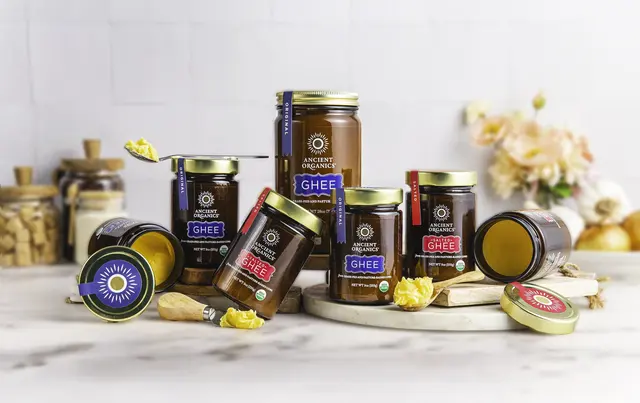
Ancient Organics is the most traditionally produced ghee on this list and the clear choice for anyone approaching ghee from an Ayurvedic perspective. The brand is family-owned, based in California, and produces ghee using a slow-simmering process from cultured, grass-fed biodynamic butter — a method that follows classical Ayurvedic preparation guidelines. The milk is sourced from biodynamic farms where standards for animal welfare and soil management exceed even USDA Organic requirements.
The flavor profile is notably richer and more complex than commodity ghee brands. The culturing process develops a deeper, slightly tangy nuttiness that Ayurveda practitioners specifically seek. The texture is golden and smooth, with a pronounced aroma when heated that signals the high-quality dairy behind it.
USDA Organic certification is present, though the biodynamic sourcing credential is arguably more meaningful for this brand’s positioning. Ancient Organics sells direct from its website and through Amazon. The premium price is the primary limitation here — this is not an everyday cooking fat for budget-conscious buyers. But for those who want the most authentic Ayurvedic ghee available in the US, Ancient Organics has no serious competition.
Best for: Ayurveda practitioners, buyers who prioritize biodynamic sourcing, premium gift-giving
Best Whole30
Pure Indian Foods
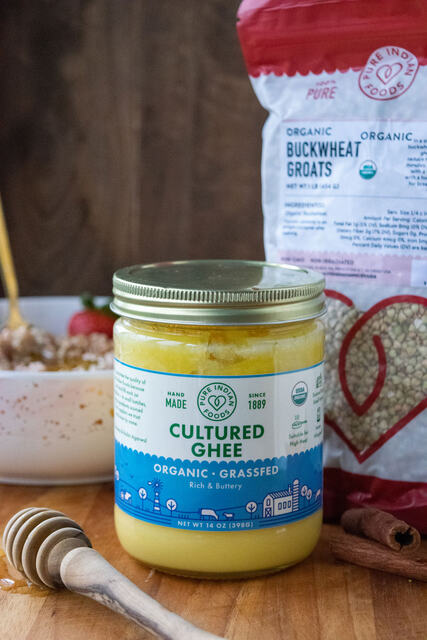
Pure Indian Foods is a family-owned New Jersey brand operating from a generations-old Indian recipe for ghee production. The brand holds both USDA Organic and Whole30 Approved certifications — a combination that is genuinely rare in the ghee category. Whole30 Approved certification requires independent verification of ingredient sourcing and production practices, making it a meaningful signal beyond a brand’s own claims.
The ghee is produced from grass-fed, organic milk and carries a mild, slightly sweet flavor profile with good depth for the price point. It performs well across a range of cooking applications and is particularly popular with Whole30 participants who do the program regularly and want a reliable certified option.
Mid-range pricing makes Pure Indian Foods accessible for regular use. The main limitation is lower retail visibility — you are more likely to find it online than at local grocery stores. The packaging is functional rather than premium, which may matter less to buyers focused on sourcing credentials than shelf presentation. For Whole30-specific needs, or for buyers who simply want a third-party certified organic grass-fed ghee at a competitive price, Pure Indian Foods is a strong value.
Best for: Whole30 participants, buyers who want both organic and Whole30 certification, value seekers
Best for Keto and Paleo
Tin Star Foods
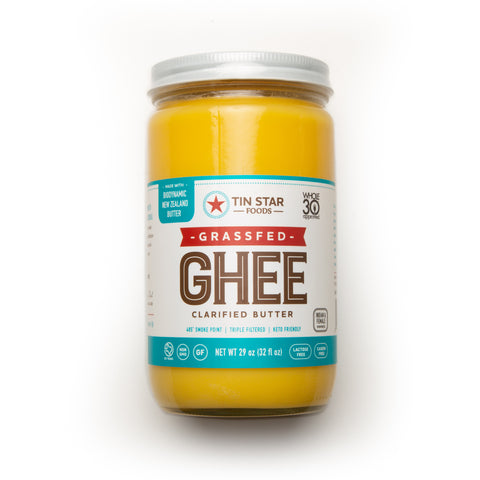
Tin Star Foods is a Texas-based brand that occupies a distinct niche: brown butter ghee. The clarification process is extended to allow the milk solids to caramelize before removal, producing a ghee with a deeper, more complex flavor — distinctly nutty and slightly sweet, more like brown butter than classic ghee. The brand uses US-sourced grass-fed, pasture-raised butter and holds Paleo Foundation certification.
The flavor profile is the primary differentiator. Where Fourth & Heart is neutral and versatile, Tin Star’s brown butter character shines in applications that benefit from richer flavor: finishing sauces, sautéed vegetables, eggs, and bulletproof coffee. Many keto and paleo community members cite Tin Star as their preferred ghee specifically because of this flavor depth.
Tin Star does not hold USDA Organic certification, which is the main limitation for buyers who prioritize organic credentials. It is also not Whole30 Approved. The premium price point and smaller jar sizes mean the per-ounce cost is higher than most alternatives. But for buyers who want a grass-fed ghee with a genuinely distinctive flavor rather than a neutral cooking fat, Tin Star Foods is worth the premium.
Best for: Keto and paleo cooks, bulletproof coffee enthusiasts, buyers who want brown butter flavor
Best Budget
Carrington Farms
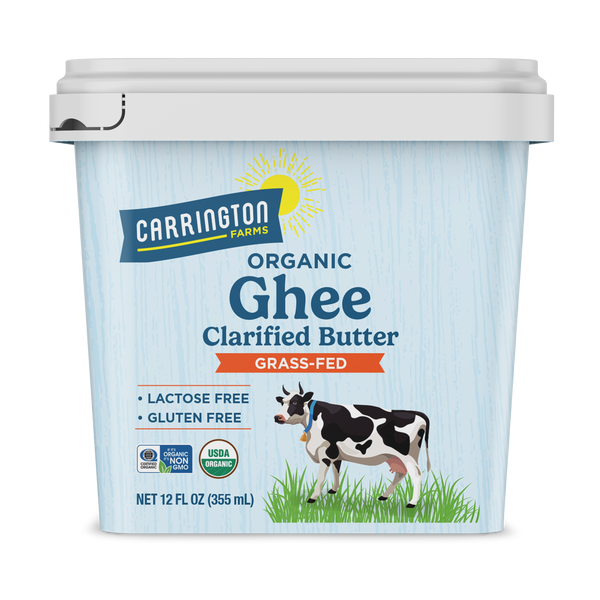
Carrington Farms delivers USDA Organic, grass-fed ghee at one of the lowest price points in the category — and in a 12-ounce size that pushes the per-ounce cost down further. The brand holds both USDA Organic and Non-GMO Project certification and is widely available at major retailers including Whole Foods and Amazon.
The flavor is clean and neutral — more mild than Fourth & Heart’s slightly nutty profile, and considerably simpler than Ancient Organics’ cultured depth. For everyday cooking applications where ghee functions as a background fat rather than a flavor component, this is not a meaningful drawback. Roasting at high heat, sautéing vegetables, or cooking eggs are all applications where Carrington Farms performs comparably to more expensive options.
The limitations are in what the brand lacks: no Whole30 Approved, no A2 or Ayurvedic positioning, and a flavor profile that will not satisfy buyers seeking something more complex. But for buyers who want certified organic grass-fed ghee for daily cooking without paying premium prices, Carrington Farms is the most accessible entry point. A large jar at budget pricing is a compelling offer for regular cooks who go through ghee quickly.
Best for: Daily cooking on a budget, buyers who want organic certification without premium pricing
Honorable Mention
Organic Valley
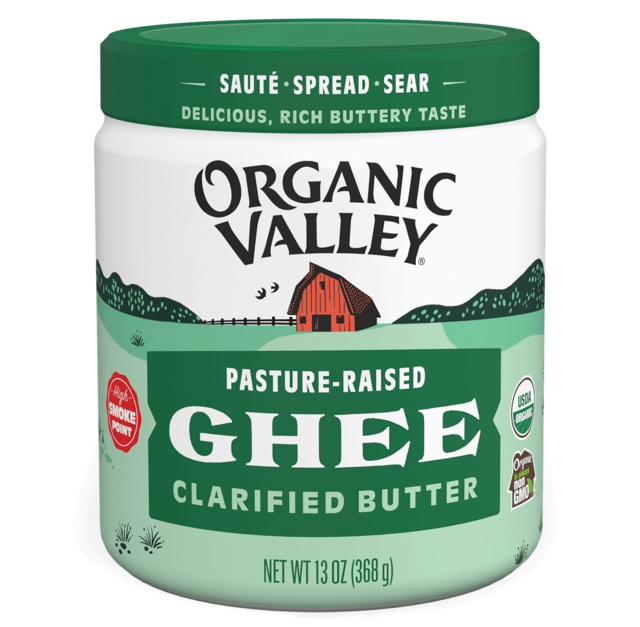
Organic Valley is a farmer-owned cooperative producing USDA Organic ghee from grass-fed, pasture-raised cows. The co-op model means sourcing standards are applied consistently across a network of member farms rather than a single supplier, and both USDA Organic and Non-GMO Project certifications are maintained. The brand is one of the most trusted names in US organic dairy and that trust transfers reasonably well to the ghee product.
The ghee has a mild, clean flavor profile with good overall quality. Widely available at grocery stores, it functions as a reliable mainstream option for buyers who already trust the Organic Valley brand for other dairy products and want to stay within that ecosystem. The mid-range price and 7.5-ounce size are competitive but not exceptional.
The reason Organic Valley lands in honorable mention rather than a top five slot is that it lacks any differentiating feature that makes it the best choice for a specific buyer type. Fourth & Heart is better distributed and has stronger sourcing transparency. Carrington Farms is cheaper. If you specifically trust the Organic Valley co-op model or can only find one certified organic ghee at your local store, it is a solid choice — just not the first pick in a competitive category.
Best for: Buyers who already trust the Organic Valley brand, mainstream grocery shoppers
Quick Comparison: Top Three Picks
| Brand | Price Tier | Grass-Fed | Organic | Best For |
|---|---|---|---|---|
| Fourth & Heart | Mid-Range | Yes | USDA Organic | Everyday cooking |
| Ancient Organics | Premium | Yes | USDA Organic + Biodynamic | Ayurveda |
| Pure Indian Foods | Mid-Range | Yes | USDA Organic + Whole30 | Whole30 buyers |
How We Picked
Selecting the best ghee brands requires evaluating claims that are easy for brands to make and harder for consumers to independently verify. Our evaluation process focused on four areas:
Sourcing Transparency: We looked at whether brands publicly disclose the geographic origin of their dairy, the breed of cattle, and pasture-access standards. “Grass-fed” without a country of origin or farm relationship is a weaker signal than brands that name specific farming partnerships or certification bodies.
Third-Party Certifications: USDA Organic requires annual independent audit. Non-GMO Project certification requires testing of ingredients. Whole30 Approved and Paleo Foundation certifications require independent review of production practices. Each certification adds a layer of accountability that self-reported claims do not. We weighted third-party certifications heavily because they represent verifiable commitments rather than marketing copy.
Production Method: Traditional ghee is produced by simmering butter until the water evaporates and milk solids separate, then filtering. Some brands use this slow, traditional method; others use faster commercial clarification. The Ayurvedic production method (starting from cultured butter and slow-simmering) produces a distinctly different flavor profile and is the method we looked for in brands positioning themselves as Ayurvedic ghee.
Value Assessment: Price tier matters in context. A premium-priced ghee with exceptional sourcing credentials is good value; a premium-priced ghee with no meaningful differentiation from mid-range alternatives is not. We evaluated value as the combination of sourcing quality, certification rigor, and price — not price alone.
Frequently Asked Questions
What is the healthiest ghee brand? ►
For most buyers, any USDA Organic, grass-fed ghee provides equivalent nutritional value. Fourth & Heart and Ancient Organics are our top picks for quality and sourcing transparency.
Is all ghee grass-fed? ►
No — many ghee brands use conventional dairy. Look for explicit 'grass-fed' labeling or certifications like Paleo Foundation or Whole30 Approved, which require grass-fed sourcing.
What is the difference between regular and Ayurvedic ghee? ►
Ayurvedic ghee is made using a traditional slow-simmering process from cultured butter, following classical Indian preparation methods. Ancient Organics is the leading Ayurvedic ghee brand in the US.
Is ghee better than butter for cooking? ►
Ghee has a significantly higher smoke point (approximately 485°F versus butter's 350°F), making it better suited for searing, roasting, and high-heat sautéing without burning.
For a full side-by-side comparison of all six brands we track, including filters for grass-fed, Whole30, A2, and Ayurvedic options, see our complete brand comparison table.