Is Ghee Whole30 Compliant? What the Rules Say and What to Buy
Ghee is allowed on Whole30 — but not all ghee brands are Whole30 Approved. Here is what the rules require and which brands are certified compliant.
Last updated:
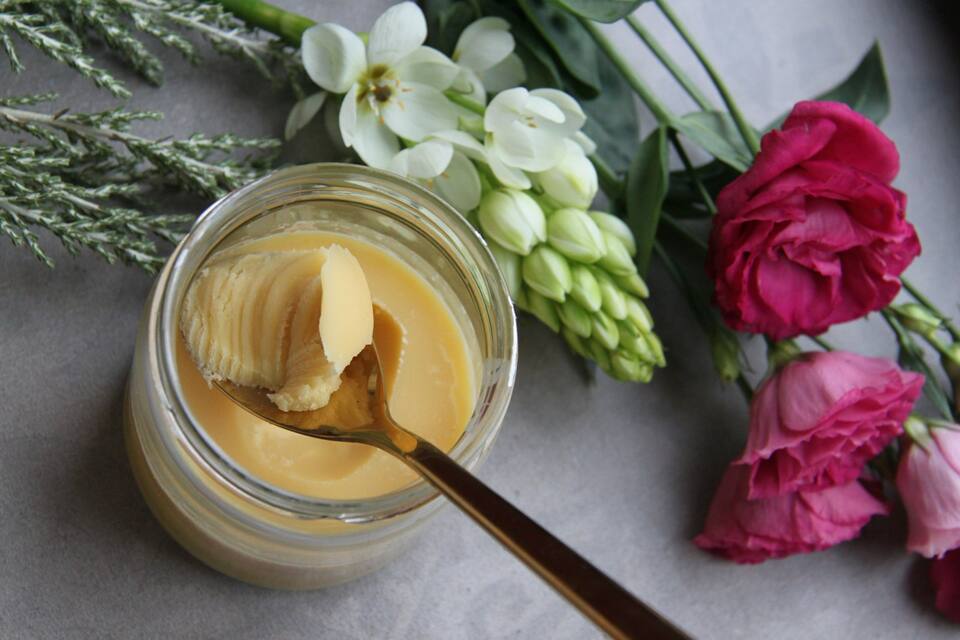
If you are starting a Whole30 round and wondering whether you have to give up ghee, the answer is straightforward: ghee is explicitly allowed. The Whole30 program makes a specific exception for ghee and clarified butter that it does not extend to any other dairy product. Understanding why the exception exists — and what it actually requires of the ghee you buy — takes about five minutes and saves you from either unnecessary restriction or accidental non-compliance.
This guide covers the Whole30 dairy rule and why ghee passes it, the difference between the Whole30 Approved certification and simple ingredient compliance, and which specific ghee brands to buy if you want either the strictest compliance or the best overall value for your Whole30 round.
Why Ghee Is Allowed on Whole30
The Whole30 Dairy Rule
The Whole30 program eliminates most dairy products because they contain milk proteins (primarily casein) and milk sugars (lactose). The dietary reasoning is that casein and lactose are the components of dairy most associated with inflammatory responses, digestive sensitivities, and immune reactions in some individuals. By eliminating them for thirty days, participants can assess their personal response more clearly.
Most forms of dairy — milk, cream, butter, cheese, yogurt, ice cream — are excluded under this rule. Butter contains milk solids that carry both casein and lactose, which is why regular butter does not pass the Whole30 dairy rule, even if it is organic and grass-fed.
Why Ghee Gets the Exception
Ghee is produced by simmering butter over low heat until the water evaporates and the milk solids separate from the pure butterfat. The milk solids are then filtered out, leaving behind clarified butter — ghee — that contains essentially no casein or lactose.
Because the components the Whole30 dairy rule targets have been physically removed during the clarification process, ghee does not raise the same concerns as butter. The Whole30 program explicitly acknowledges this: its official rules state that ghee and clarified butter are the only dairy products permitted during a Whole30 round.
This is not a loophole or an informal allowance — it is written into the official program rules and has been the case since the early versions of the Whole30 protocol. Participants who consume plain ghee (no additives, no dairy blend-ins) are fully within the rules of the program.
The Clarification Test
The Whole30 exception applies specifically to ghee and clarified butter — products where the clarification is complete and no milk solids remain. It does not extend to:
- Regular butter: Contains milk solids — not compliant
- Compound butters: Often contain cream, herbs in dairy bases, or other non-compliant ingredients
- Ghee blends with cream or flavoring: If a product adds cream back after clarification or uses a non-compliant flavoring base, it may not be compliant even if labeled “ghee”
- Flavored ghees with non-compliant additives: Some flavored ghee products add ingredients (sweeteners, certain spices, dairy derivatives) that would make them non-compliant
The safest approach is to read the ingredient label: compliant ghee should list only “grass-fed butter” or “clarified butter from grass-fed cows” (or equivalent) with no additional ingredients that would trigger Whole30 restrictions.
Whole30 Approved vs Whole30 Compliant
This is the distinction that trips up most Whole30 participants, and it is worth understanding precisely.
Whole30 Compliant (by ingredients)
Whole30 compliance is a description of whether a product’s ingredients meet the Whole30 program rules. Any plain, single-ingredient ghee — regardless of brand — is technically Whole30 compliant by ingredients. You do not need a certification to use ghee on Whole30.
If you walk into Whole Foods and buy a house-brand grass-fed clarified butter with a single-ingredient label, that product is Whole30 compliant even though it has never been reviewed by Whole30 Inc. You are responsible for reading the label and verifying that no non-compliant ingredients are present, but there is no requirement to purchase certified products.
Whole30 Approved (formally certified)
Whole30 Approved is a paid third-party certification program administered by Whole30 Inc. Brands that want to carry the Whole30 Approved logo pay a licensing fee and submit their products for review. Whole30 Inc. evaluates the ingredient list, verifies production practices, and grants certification if the product meets their standards.
The practical value of the Whole30 Approved certification is convenience and confidence. You do not have to evaluate the label yourself — someone has done it for you and committed to re-evaluate it if the formulation changes. For first-time Whole30 participants, or for buyers who want the strictest possible assurance, the certification adds a meaningful layer of verification.
The important distinction: Absence of the Whole30 Approved certification does not mean a product is non-compliant. It means the brand has not paid for and completed the certification process. Many excellent ghee brands are fully compliant by ingredients without holding the official certification.
Brand Guide for Whole30
Only Whole30 Approved Certified Ghee in This Guide
Pure Indian Foods
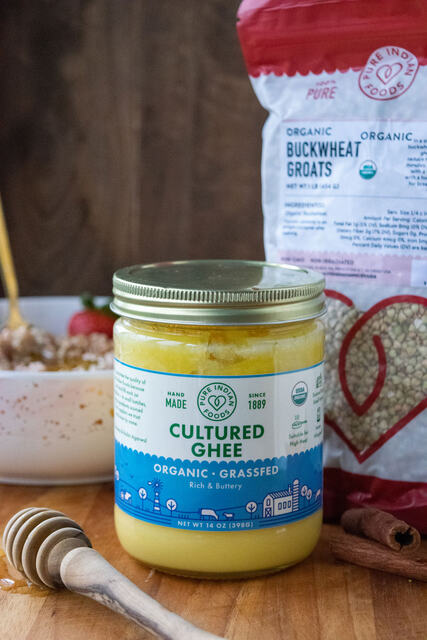
Pure Indian Foods is a family-owned New Jersey brand that has held the Whole30 Approved certification, making it the clearest choice for Whole30 participants who want formal certification rather than ingredient-level compliance alone. The brand also holds USDA Organic certification, which requires annual independent audit of sourcing and production practices.
The ghee is produced from grass-fed, organic milk using a traditional production method. The flavor is mild with a slight natural sweetness and good depth for the price point. It performs well across standard Whole30 cooking applications: sautéing vegetables, cooking eggs, finishing proteins, roasting at high heat.
For first-time Whole30 participants, Pure Indian Foods removes all ambiguity: you do not have to verify the label, evaluate the brand’s certifications, or make a judgment call. The Whole30 Approved stamp means Whole30 Inc. has reviewed and approved this product as compatible with the program. If the formulation changes in a way that would affect compliance, the certification would be reviewed.
The main practical limitation is retail availability — Pure Indian Foods is more likely to be found online than at local grocery stores. Amazon carries it consistently. If you are stocking up before a Whole30 round, ordering online is the reliable route.
Certifications: Whole30 Approved, USDA Organic, Grass-Fed
Best for: Strict Whole30 participants, first-time Whole30 buyers, buyers who want formal certification
Whole30 Compliant by Ingredients, Not Certified
Fourth & Heart
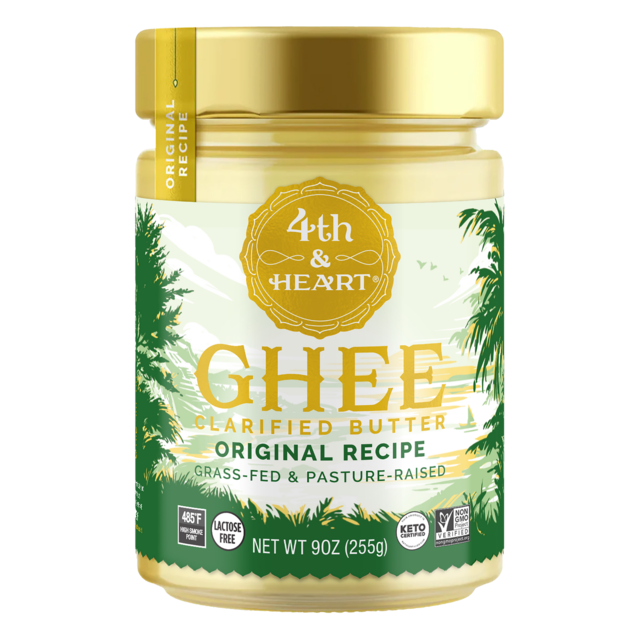
Fourth & Heart is one of the most widely available grass-fed ghee brands in the US market, carried at Whole Foods, Target, Costco, and Amazon. The brand holds USDA Organic and Non-GMO Project certifications and uses grass-fed dairy sourced from New Zealand.
From a Whole30 ingredient compliance standpoint, Fourth & Heart’s original variety passes: the ingredient list is clarified butter from grass-fed cows with no non-compliant additives. Many experienced Whole30 participants use Fourth & Heart without concern. The Whole30 community widely recognizes it as compliant by ingredients, even without the formal certification.
What Fourth & Heart does not have is the Whole30 Approved certification from Whole30 Inc. The brand has not pursued this certification, which means there is no formal third-party review of the product for Whole30 compatibility. For Whole30 purists or first-time participants who want that certainty, Pure Indian Foods is the better choice. For experienced participants comfortable reading labels and assessing compliance independently, Fourth & Heart is an excellent, widely available option.
Certifications: USDA Organic, Non-GMO Project (not Whole30 Approved)
Best for: Experienced Whole30 participants, buyers who prioritize availability and value
What to Avoid: Non-Compliant Ghee Variations
Not every product labeled “ghee” or “clarified butter” is Whole30 compliant. Common non-compliant variations to watch for:
Flavored ghees with non-compliant additives: Some ghee brands offer vanilla, turmeric, or other flavored varieties. Check the ingredient list carefully — vanilla flavor can contain alcohol, some spice blends include non-compliant ingredients, and any sweetener-containing flavor would be non-compliant.
Ghee blended with cream or dairy: Some premium cooking fats blend ghee with additional cream for richness. These contain milk solids and are not Whole30 compliant regardless of how they are marketed.
Ghee with added sugars: Any ghee that lists sweetener in any form — including honey, maple syrup, coconut sugar, or stevia — is not Whole30 compliant.
Ghee labeled “with butter oil”: This sometimes indicates milk solids have been partially retained. Verify the full ingredient list.
Ghee Label Checklist for Whole30
When evaluating a ghee label for Whole30 compliance, check for:
Required:
- Single-ingredient: “ghee,” “clarified butter,” “grass-fed ghee,” or “clarified butter from grass-fed cows” — any of these alone is compliant
- No added ingredients of any kind
Automatic disqualifiers:
- Any sweetener (sugar, honey, maple syrup, agave, coconut sugar, stevia, monk fruit)
- Cream or milk solids added after clarification
- Non-compliant flavoring agents
- “Butter oil” or “anhydrous milk fat” blended with ghee
Optional but reassuring:
- Whole30 Approved logo — formal verification by Whole30 Inc.
- USDA Organic — independent sourcing audit
- Grass-fed certification (Paleo Foundation) — independent verification of grass-fed claim
If a product passes the ingredient list check above, it is Whole30 compliant. If it carries the Whole30 Approved logo, it has been formally certified.
Whole30 Brand Comparison
| Brand | Whole30 Approved | USDA Organic | Grass-Fed | Best For |
|---|---|---|---|---|
| Pure Indian Foods | Yes (certified) | Yes | Yes | Whole30 strict compliance |
| Fourth & Heart | No (compliant by ingredients) | Yes | Yes | Availability and value |
| Ancient Organics | No | Yes | Yes (biodynamic) | Ayurveda practitioners |
| Tin Star Foods | No | No | Yes (Paleo cert.) | Keto-paleo crossover |
Frequently Asked Questions
Is ghee allowed on Whole30? ►
Yes — ghee is explicitly allowed on Whole30. The Whole30 program permits ghee and clarified butter as the only dairy products allowed, because the milk solids (where lactose and casein are concentrated) have been removed during clarification.
What is the difference between Whole30 Approved and Whole30 compliant? ►
Whole30 Approved is a paid third-party certification from Whole30 Inc. that brands apply for. Whole30 compliant means the ingredients meet the Whole30 dietary rules — even without the official certification. Plain grass-fed ghee from any brand is typically compliant by ingredients, but only Whole30 Approved brands have been formally verified.
Can I use regular butter on Whole30? ►
No — regular butter is not allowed on Whole30 because it contains milk solids, including lactose and casein. Only ghee and clarified butter (with the milk solids fully removed) are permitted dairy products.
Which ghee brand is Whole30 Approved? ►
Pure Indian Foods is the best-known Whole30 Approved ghee brand in the US. Fourth & Heart is Whole30 compliant by ingredients but does not hold the official Whole30 Approved certification.
For a full side-by-side comparison of all brands we track — including Whole30 Approved, grass-fed, organic, and A2 filters — see our complete brand comparison table. For an overview of the best ghee brands across all categories, see our best ghee brands roundup.