Ghee Smoke Point: What It Is, Why It Matters, and How to Use It
Ghee has one of the highest smoke points of any cooking fat — around 482°F. Here is what that means for your cooking and how ghee compares to butter, olive oil, and coconut oil.
Last updated:
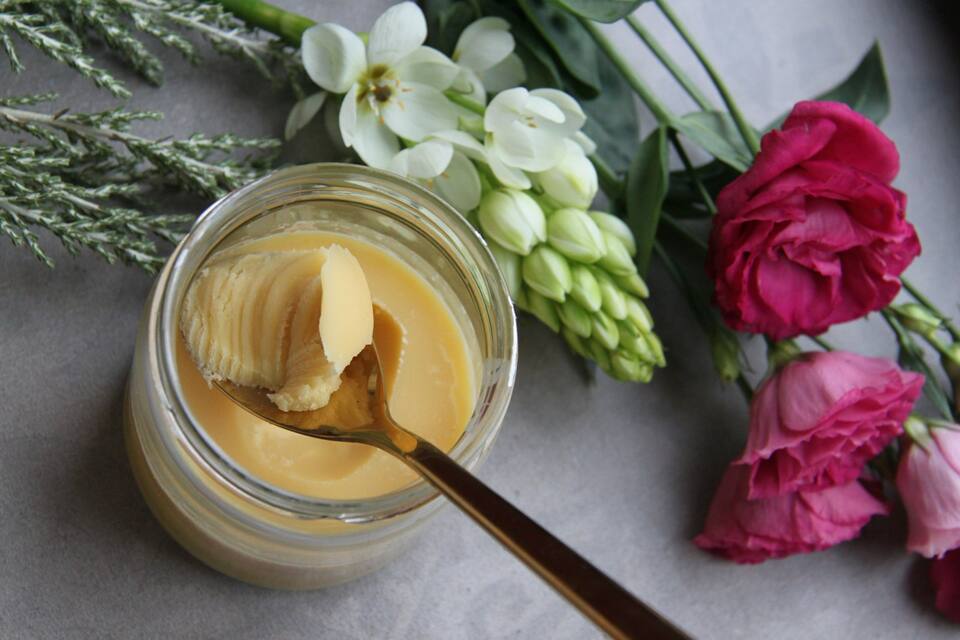
Smoke point is one of the most practical considerations when choosing a cooking fat, and ghee’s high smoke point is one of the strongest arguments for keeping it in your kitchen. At approximately 482–485°F (250°C), ghee can handle high-heat cooking that would burn butter, break down olive oil, or produce off-flavors in coconut oil.
But understanding smoke point requires knowing more than just a temperature number. This guide explains what a smoke point is, why ghee’s is so high, how it compares to other common fats, and when ghee is — and is not — the right tool for the job.
What Is a Smoke Point?
A cooking fat’s smoke point is the temperature at which it begins to visibly smoke when heated. When a fat reaches its smoke point, it is undergoing rapid oxidation and thermal degradation — the fat molecules are breaking down and producing smoke, free radicals, and off-flavors.
Cooking above a fat’s smoke point creates several problems:
- Flavor degradation: The breakdown products of oxidized fat taste bitter, acrid, and unpleasant. Food cooked in smoking oil often absorbs these off-flavors.
- Free radical production: High-temperature fat oxidation produces reactive compounds. Regularly consuming oxidized fats is something most nutritionists recommend avoiding.
- Loss of beneficial compounds: Heat-sensitive nutrients and antioxidants in unrefined fats (like polyphenols in extra virgin olive oil) degrade rapidly above the smoke point.
- Fire risk: Fats held significantly above their smoke point can eventually reach flashpoint — the temperature at which they ignite. This is a real kitchen safety concern.
The practical implication: choose a fat with a smoke point comfortably above the temperature your cooking method requires.
Ghee’s Smoke Point: The Science Behind It
Ghee has a smoke point of approximately 482–485°F (250°C). This is among the highest of any commonly used cooking fat, and the reason is directly tied to how ghee is made.
Butter contains three components: butterfat (the liquid fat), water (approximately 15–17% of butter’s weight), and milk solids (proteins including casein and whey, plus lactose). The milk solids are the problem for high-heat cooking. Milk proteins begin to brown and burn at relatively low temperatures — around 250–300°F — well below the temperature needed for effective searing or stir-frying.
Ghee is made by slowly heating butter until the water evaporates and the milk solids separate and are strained out. What remains is nearly pure clarified butterfat. Without the milk solids, the fat can be heated to a much higher temperature before oxidizing. The result is a smoke point that is 130–180°F higher than whole butter.
This same principle applies to refined oils: stripped of impurities, a fat’s smoke point rises. Refined coconut oil has a higher smoke point than unrefined; refined avocado oil has a higher smoke point than cold-pressed. Ghee follows the same logic.
Smoke Point Comparison: Ghee vs Common Cooking Fats
| Fat | Smoke Point (°F) | Smoke Point (°C) | Best For |
|---|---|---|---|
| Avocado oil (refined) | ~520°F | ~271°C | High-heat frying, searing |
| Ghee | ~482–485°F | ~250°C | Searing, sautéing, roasting, stir-fry |
| Clarified butter | ~450°F | ~232°C | Searing, sautéing — essentially equivalent to ghee |
| Vegetable oil (refined) | ~400–450°F | ~204–232°C | General cooking, frying |
| Refined coconut oil | ~400°F | ~204°C | Sautéing, medium-high heat baking |
| Extra virgin olive oil | ~375°F | ~190°C | Sautéing, roasting, finishing |
| Unrefined coconut oil | ~350°F | ~177°C | Low-medium heat cooking, baking |
| Whole butter | ~302–350°F | ~150–177°C | Low-heat sautéing, baking, finishing sauces |
Note: smoke points vary by refinement level, production batch, and testing methodology. The values above represent commonly reported ranges from food science literature. Extra virgin olive oil, in particular, is sometimes reported with a higher smoke point when fresh, high-quality oil is tested under controlled conditions.
When to Choose Ghee
Searing meat: Searing requires a pan temperature of 425°F or higher to achieve the Maillard reaction (the browning chemistry that creates crust and complex flavors). Butter will burn at this temperature. Ghee handles it easily, and its fat-soluble flavor compounds contribute a richness that neutral oils cannot replicate.
Stir-frying: Traditional stir-fry technique involves very high pan heat (450°F+) and fast movement. Ghee’s smoke point supports this; its rich flavor is an asset in many South Asian and East Asian-influenced preparations.
Roasting vegetables: Roasting at 400–425°F is within ghee’s comfort zone. Tossed vegetables develop good caramelization without the risk of the fat burning before the food is cooked through.
Indian and South Asian cooking: Ghee is the traditional fat in many tadka (tempering) preparations, where spices are bloomed in hot fat at high temperature. Ghee’s smoke point is appropriate for this technique; its flavor is integral to the cuisine.
Finishing: A knob of ghee added to a finished dish — pasta, rice, roasted vegetables, a steak resting off heat — adds richness without further heat exposure. Here the smoke point is irrelevant, and ghee’s distinctive nutty, caramelized notes become the reason to choose it.
When NOT to Choose Ghee
Delicate baking: Butter’s approximately 15% water content creates steam in the oven, which contributes to lift in pastries, flakiness in pie crusts, and specific texture in cookies and cakes. Ghee lacks this water content. Substituting ghee for butter in most baking recipes will change texture, rise, and crumb — sometimes positively, often not, depending on the recipe.
Cold applications: Ghee is solid at room temperature (like butter). It is not suitable as a direct substitute for olive oil in vinaigrettes, cold sauces, or as a dipping oil — it will solidify on contact with cool food or surfaces.
Very low heat finishing where neutral flavor is desired: Ghee has a pronounced, nutty flavor. For applications where you want fat’s lubrication properties without flavor contribution — certain pastry applications, delicate white sauces — a neutral oil or unsalted butter may be preferable.
Budget-sensitive deep frying: Ghee’s high smoke point makes it technically suitable for deep frying, but the cost is prohibitive. For deep frying at home, refined avocado oil or refined coconut oil offer comparable smoke points at lower cost per liter.
What is ghee's smoke point? ►
Ghee has a smoke point of approximately 482–485°F (250°C). This is significantly higher than whole butter (302–350°F), making it more suitable for high-heat cooking applications like searing, stir-frying, and roasting.
Why does ghee have such a high smoke point? ►
Butter's low smoke point comes from its milk solids (proteins and lactose), which burn at relatively low temperatures. During ghee production, these milk solids are removed, leaving nearly pure clarified butterfat. Pure fat has a much higher smoke point than fat-plus-protein mixtures.
Can I use ghee for deep frying? ►
Ghee can technically be used for deep frying given its high smoke point, but its cost makes this impractical for most home cooks. Refined avocado oil (520°F smoke point) or refined coconut oil are more economical choices for deep frying.
Does ghee smoke point vary by brand? ►
Smoke point varies slightly by brand based on how thoroughly the milk solids were removed during clarification. Ghee that has been more carefully clarified will have a higher smoke point and a longer shelf life. Most commercial grass-fed ghee brands fall in the 480–485°F range.
What to Read Next
For a full head-to-head comparison of ghee and butter across flavor, nutrition, and cooking applications, see Ghee vs Butter.
To compare specific ghee brands on sourcing, certifications, and price tier, visit Best Ghee Brands.